Stone, Timber & Concrete
Building a Material Language
How natural materials shape atmosphere, identity and the relationship between architecture and place.
Stone, Timber & Concrete
Building a Material Language
How natural materials shape atmosphere, identity and the relationship between architecture and place.
Material as Architecture
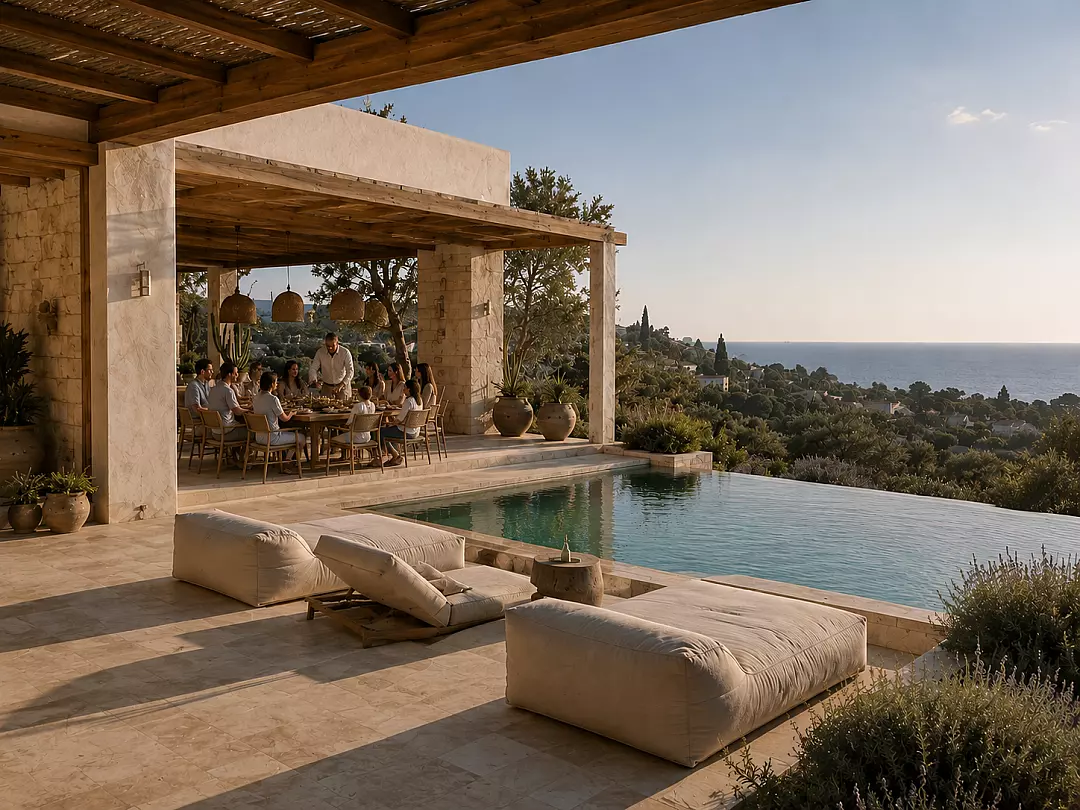
Architecture is often understood first through form, but experienced through material. The texture of stone, the warmth of timber and the weight of exposed concrete each create a different relationship between a building, its occupants and its surroundings. When used together, they become more than a palette, they form a language. At ATELIER BDN, material selection begins with context. Landscape, climate, light, texture, ageing and human experience influence how each material belongs within a project. Rather than treating finishes as a final layer, material becomes part of the architectural idea itself.
01 — Stone
Belonging to the Ground
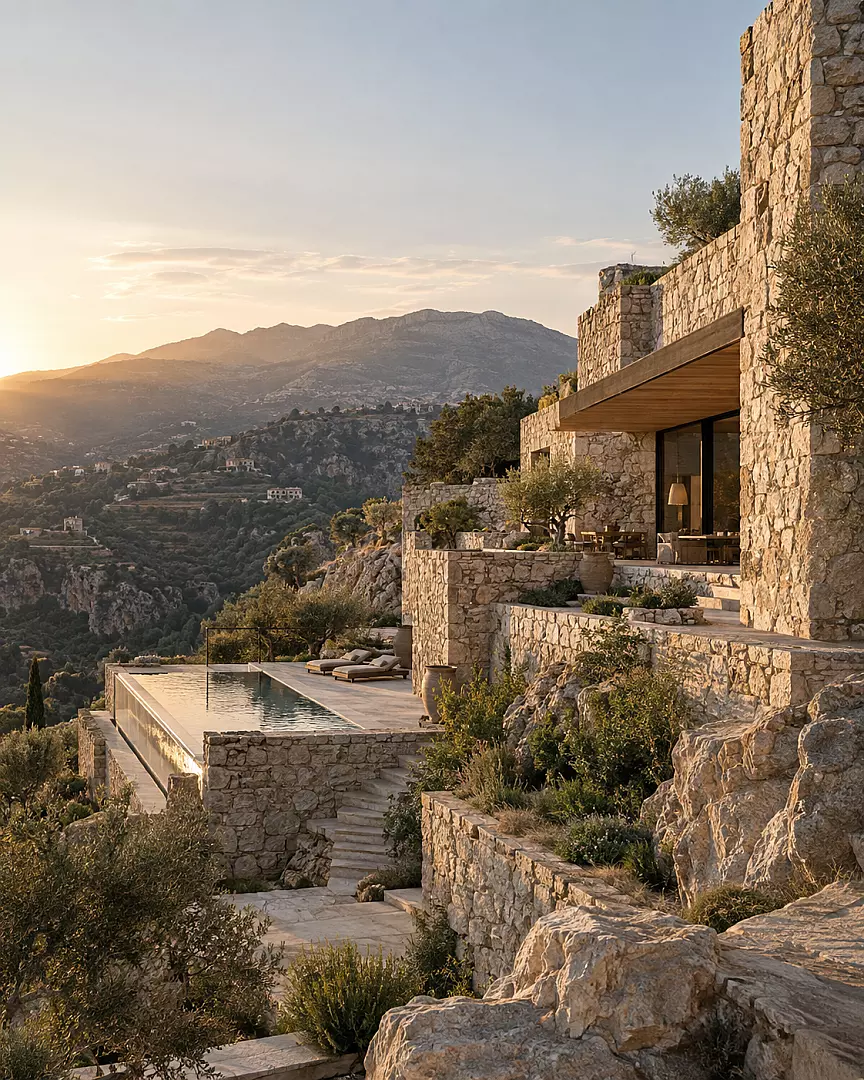
Stone gives architecture a sense of permanence. Its weight, texture and natural variation allow a building to feel anchored to its surroundings rather than placed upon them.
Retaining walls, terraces and solid volumes can extend the language of the terrain into the architecture itself. Rather than seeking perfect uniformity, we value the irregularities of stone, subtle shifts in colour, surface and weathering that allow a building to develop character over time.
02 — Timber
Warmth Against Mass
Where stone establishes weight and permanence, timber introduces warmth, tactility and human scale.
Used across ceilings, screens, joinery and sheltered outdoor spaces, timber softens heavier architectural elements while creating a closer relationship with the spaces we inhabit. Its grain, tone and natural variation bring a quiet warmth that becomes especially powerful when placed alongside stone and concrete.